





Product

Solutions

Why TrueContext

Pricing

Resources

close

Product

Solutions

Why TrueContext

Pricing

Resources

west

PLATFORM

Field Service Intelligence Platform

The Definitive Guide to Field Intelligence

INTEGRATIONS

ServiceNow

Salesforce

ServiceMax

Microsoft

REST API

View all integrations

WHAT WE DO

Enhanced Operations

Self-Learning Field Service

Mobile Forms App

Smart, Context-Aware Forms

Workflow Creation

AI-Augmented Guided Workflows

Field Intelligence Innovation

From raw data to operational direction

Compliance & Security

Enterprise-Grade Security and Compliance

west

MOST COMMONLY USED FOR

Installation

More assets in less time with guided workflows

Maintenance & Repair

Improve asset uptime with predictive maintenance

Inspections & Compliance

Optimize your operational excellence

Environment, Health & Safety

Protect workers, the public, and the environment

INDUSTRIES WE SERVE

Industrial Equipment

Power asset performance and human safety

Medical Equipment

Precision for sophisticated instrumentation

Oil & Gas

Operational excellence across the energy stream

Field Service

Break new ground in productivity, quality, and safety

Use Case Spotlight

west

THE TRUECONTEXT ADVANTAGE

Field Intelligence

Collect, Analyze, Optimize

Operational Intelligence

Rich, Insightful, Predictive

Augmented Technicians

Connected, Informed, Amplified

Connected Worker

Smarter, Safer, AI-Augmented

Operational Agility

Intelligent, Accelerated, Efficient

MAKING THE SWITCH

Internal Development vs. TrueContext

A Strategic Comparison

Rapid Migration

From paper or legacy systems

Deployment Services

Dedicated expertise, enhanced support

Resource Spotlight

west

EXPLORE

Customer Stories

TrueContext applied in enterprise environments

Webinar & Events

Explore emerging trends with us at upcoming events

Blog

Stories and insights from the field

LEARN

Knowledge Base

Answers to the most common product questions

Product Documentation

TrueContext features, usage, and technical details

TrueContext University

Hands-on training to optimize your deployment

Resource Library

Content for your industry and application

CONNECT

Community

Collaborate with industry peers

Contact Support

Having trouble? Ask our product support team

Talk to Sales

See how TrueContext can help your business

Become a Partner

Join our growing partner network

Ebook

What your best technician knows, and why your AI won’t learn it

What your best technician knows, and why your AI won’t learn it

A decade of digitization captured outcomes, rather than the judgment that led to them. That’s what leaves when veterans retire.

The core idea
“What they have is a record of outcomes. What retires with your best technician is judgment.”

Hire the replacement. Lose the skill

20–25% of skilled trades workers in North America are over the age of 55, according to the US BLS and Statistics Canada.

A technician with thirty years on one class of equipment gives notice. The knowledge transfer plan is two junior techs riding along for a few days with notebooks. Everyone in the room understands this is inadequate. Nobody has a better plan.

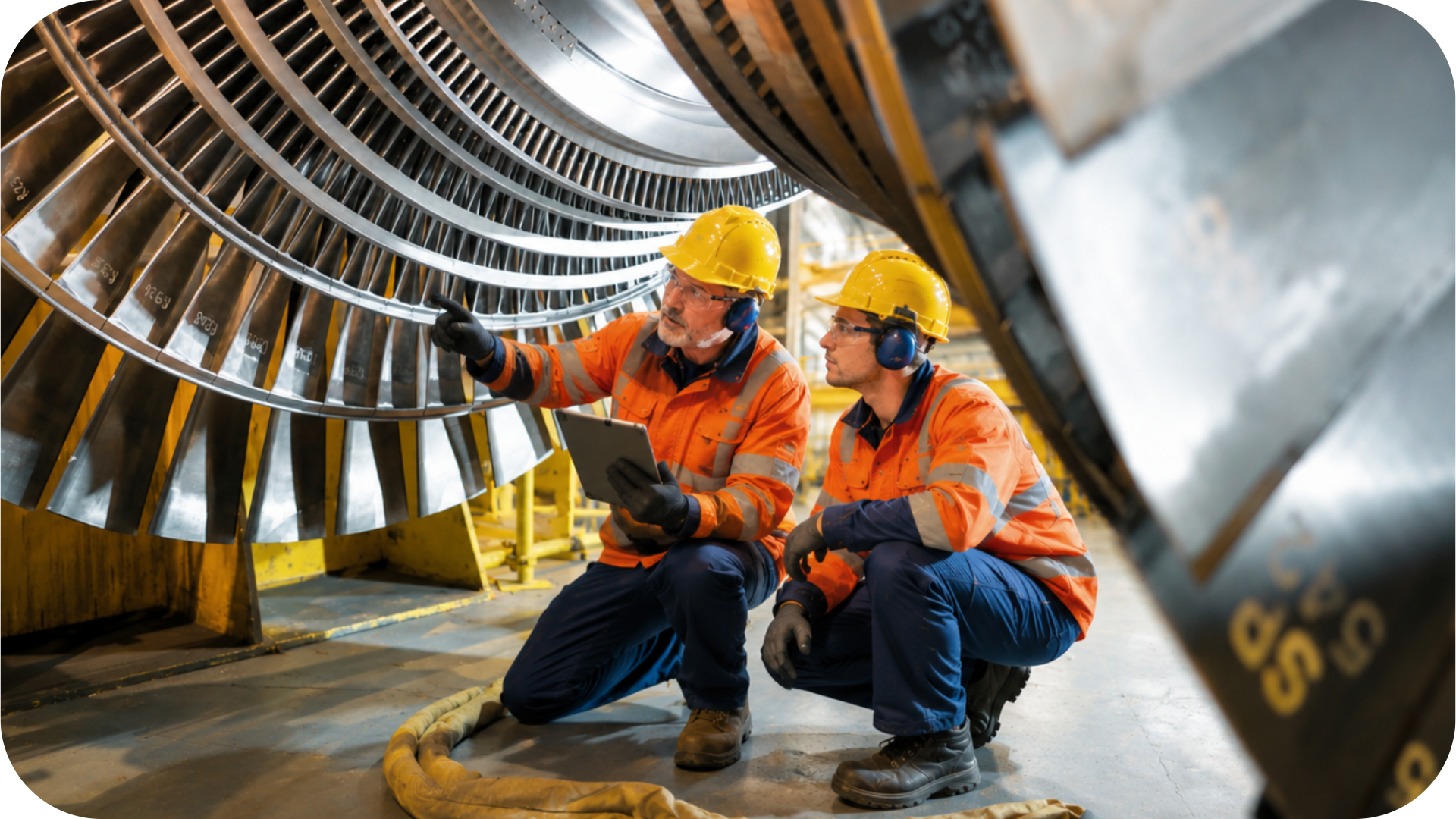
I have watched versions of this play out across our customer base, and the organizational response is almost always the same. Roughly 20 to 25% of skilled trades workers in North America are over the age of 55, according to the US BLS and Statistics Canada. Operations leaders read that number as a staffing problem and structure the solution accordingly: one-for-one hiring against every retirement, better onboarding, heavier reliance on third-party teams. All of it is worth doing. None of it addresses what actually leaves.

A thirty-year frontliner is not a replaceable name on a roster. They are decades of accumulated pattern recognition, enough to diagnose a failure in two minutes from a sound or a smell that appears in no manual. Hire their replacement on day one and you have solved for headcount. You have not solved for the skill that left the building.

6% of organizations describe their field data as high quality and ready for analytics and AI. Source: The State of Field Service in 2026

A record of outcomes is not a record of judgment

Across the organizations surveyed for this report, six percent describe their field data as high quality and ready for analytics and AI. Six percent. That number is the story, and it is the part of the AI conversation most vendors would rather not raise.

Most field organizations believe they handled this years ago, when they digitized. They can point to a decade of work order history, completion records, parts usage, and resolution codes, all of it searchable. What they have is a record of outcomes. What retires with your best technician is judgment, and judgment was never in the system to begin with.

Ninety minutes of reasoning. Eleven words of record.

The record reads: “replaced valve assembly, 90 minutes, closed.” Here is what happened: a technician with twenty years on that equipment heard something wrong in the first two minutes. He skipped the diagnostic sequence the manual prescribes, because he already knew where it led. He checked three things that don’t appear on any checklist. He ruled out the two most likely causes. Then he replaced the valve.

Work order · WO-4471Closed
“Replaced valve assembly, 90 minutes, closed.”
Entered from the truckAt end of shiftForm built for an auditorReasoning kept 1 of 5 steps
This is everything a model will ever learn from this job.
  1. 0:02 Heard something wrongIn the first two minutes, from a sound not found in any manual. Not captured
  2. 0:04 Skipped the prescribed sequenceHe already knew where the manual’s diagnostic path would lead. Not captured
  3. 0:15 Checked three thingsNone of them appear on any checklist. Not captured
  4. 0:40 Ruled out the two likeliest causesThe reasoning a newer technician most needs. Not captured
  5. 1:30 Replaced the valveThe only step the system recorded. Captured
Ninety minutes of expert reasoning, and the system kept eleven words of it.

A better model is a more fluent blind spot

The knowledge exists. The record of it does not. Give a model ten years of outcome records and it learns, faithfully, to reproduce outcome records. Swap in a better model and you get a more fluent version of the same blind spot.

So, the question is not which model to buy. It is how to capture the right knowledge, while the people who hold it are still on the payroll. Four conditions determine whether you build a data layer that can actually learn, or one that only records the result.

A model trained on outcomes can tell a newer tech
  • What got replaced on similar jobs
  • How long the job took
  • Which parts were used
It cannot tell them
  • What the veteran ruled out
  • Why he skipped the manual’s sequence
  • What he heard in the first two minutes
Where to start

Four conditions for a data layer that can actually learn

1

Capture at the moment of decision, not at the end of the day

Reasoning is perishable. Anything that waits for the end of a shift collects a summary, and the summary is precisely where the logical chain gets dropped.

2

Structure the judgment, not just the result

Ask instead: what did you rule out? Which path did you skip, and why? These are answerable in seconds when the workflow asks well, and unrecoverable when it does not.

3

Subtract keystrokes before you add any

Ask a technician to document more and they will document less. Every field you add has to be paid for by removing two the technician resents.

4

Return value inside the same workflow

If the technician sees nothing back, capture becomes an unpaid tax. Show the history, the likely cause, the part that worked last time — in the same place the data goes in.

Field intelligence

A dashboard tells you what happened. A model trained on outcomes will tell you the same thing, more fluently. Field intelligence is the layer underneath.

The sound the veteran heard, the causes he ruled out, and his reasons for ruling them out, captured while he is still standing at the equipment. That judgment is in your building today. In five years a great deal of it walks out the door permanently, and it does not come back. The only question worth asking is how much of it you will have captured before then.


Go deeper · 8-part guide

The definitive guide to field intelligence

Build the foundation this report says AI depends on: what field intelligence is, how it works, and how to make it real in your operation.

Read the guide
Diagnostic · A fast test

Could a stranger reconstruct the why?

Pull ten closed work orders from your most complex equipment class. For each, ask whether a competent technician who has never seen that machine could reconstruct, from the record alone, why the work was done the way it was done. Tap each record to mark it.

0of 10 reconstructable
Mark your ten recordsTap once for yes, twice for no. The pattern tells you where your data layer stands.
Next in the report Chapter 4

The productivity crisis is relative, not absolute

Hours are being lost to coordination and paperwork. Recovering them raises output without adding people — and it’s not as hard as it sounds.

What your best technician knows, and why your AI won't learn it

A decade of digitization captured outcomes, rather than the judgment that led to them. That's what leaves when veterans retire.

The core idea

“What they have is a record of outcomes. What retires with your best technician is judgment.”

Hire the replacement. Lose the skill


20–25%
of skilled trades workers in North America are over the age of 55, according to the US BLS and Statistics Canada.

A technician with thirty years on one class of equipment gives notice. The knowledge transfer plan is two junior techs riding along for a few days with notebooks. Everyone in the room understands this is inadequate. Nobody has a better plan.

I have watched versions of this play out across our customer base, and the organizational response is almost always the same. Roughly 20 to 25% of skilled trades workers in North America are over the age of 55, according to the US BLS and Statistics Canada. Operations leaders read that number as a staffing problem and structure the solution accordingly: one-for-one hiring against every retirement, better onboarding, heavier reliance on third-party teams. All of it is worth doing. None of it addresses what actually leaves.

A thirty-year frontliner is not a replaceable name on a roster. They are decades of accumulated pattern recognition, enough to diagnose a failure in two minutes from a sound or a smell that appears in no manual. Hire their replacement on day one and you have solved for headcount. You have not solved for the skill that left the building.

6%
of organizations describe their field data as high quality and ready for analytics and AI.
Source: The State of Field Service in 2026

A record of outcomes is not a record of judgment

Across the organizations surveyed for this report, six percent describe their field data as high quality and ready for analytics and AI. Six percent. That number is the story, and it is the part of the AI conversation most vendors would rather not raise.

Most field organizations believe they handled this years ago, when they digitized. They can point to a decade of work order history, completion records, parts usage, and resolution codes, all of it searchable. What they have is a record of outcomes. What retires with your best technician is judgment, and judgment was never in the system to begin with.

Ninety minutes of reasoning. Eleven words of record.

The record reads: “replaced valve assembly, 90 minutes, closed.” Here is what happened: a technician with twenty years on that equipment heard something wrong in the first two minutes. He skipped the diagnostic sequence the manual prescribes, because he already knew where it led. He checked three things that don't appear on any checklist. He ruled out the two most likely causes. Then he replaced the valve.


Work order · WO-4471Closed

“Replaced valve assembly, 90 minutes, closed.”

Entered from the truckAt end of shiftForm built for an auditorReasoning kept 1 of 5 steps

This is everything a model will ever learn from this job.

  1. 0:02
    Heard something wrongIn the first two minutes, from a sound not found in any manual.
    Not captured
  2. 0:04
    Skipped the prescribed sequenceHe already knew where the manual's diagnostic path would lead.
    Not captured
  3. 0:15
    Checked three thingsNone of them appear on any checklist.
    Not captured
  4. 0:40
    Ruled out the two likeliest causesThe reasoning a newer technician most needs.
    Not captured
  5. 1:30
    Replaced the valveThe only step the system recorded.
    Captured

Ninety minutes of expert reasoning, and the system kept eleven words of it.


A better model is a more fluent blind spot

The knowledge exists. The record of it does not. Give a model ten years of outcome records and it learns, faithfully, to reproduce outcome records. Swap in a better model and you get a more fluent version of the same blind spot.

So, the question is not which model to buy. It is how to capture the right knowledge, while the people who hold it are still on the payroll. Four conditions determine whether you build a data layer that can actually learn, or one that only records the result.

A model trained on outcomes can tell a newer tech

  • What got replaced on similar jobs
  • How long the job took
  • Which parts were used
It cannot tell them

  • What the veteran ruled out
  • Why he skipped the manual's sequence
  • What he heard in the first two minutes

Where to start

Four conditions for a data layer that can actually learn

1

Capture at the moment of decision, not at the end of the day

Reasoning is perishable. Anything that waits for the end of a shift collects a summary, and the summary is precisely where the logical chain gets dropped.

2

Structure the judgment, not just the result

Ask instead: what did you rule out? Which path did you skip, and why? These are answerable in seconds when the workflow asks well, and unrecoverable when it does not.

3

Subtract keystrokes before you add any

Ask a technician to document more and they will document less. Every field you add has to be paid for by removing two the technician resents.

4

Return value inside the same workflow

If the technician sees nothing back, capture becomes an unpaid tax. Show the history, the likely cause, the part that worked last time — in the same place the data goes in.

Field intelligence

A dashboard tells you what happened. A model trained on outcomes will tell you the same thing, more fluently. Field intelligence is the layer underneath.

The sound the veteran heard, the causes he ruled out, and his reasons for ruling them out, captured while he is still standing at the equipment. That judgment is in your building today. In five years a great deal of it walks out the door permanently, and it does not come back. The only question worth asking is how much of it you will have captured before then.

Go deeper · 8-part guide

The definitive guide to field intelligence

Build the foundation this report says AI depends on: what field intelligence is, how it works, and how to make it real in your operation.

Read the guide

Diagnostic · A fast test

Could a stranger reconstruct the why?

Pull ten closed work orders from your most complex equipment class. For each, ask whether a competent technician who has never seen that machine could reconstruct, from the record alone, why the work was done the way it was done. Tap each record to mark it.

0of 10 reconstructable
Mark your ten recordsTap once for yes, twice for no. The pattern tells you where your data layer stands.

Next in the report

Chapter 4

The productivity crisis is relative, not absolute

Hours are being lost to coordination and paperwork. Recovering them raises output without adding people — and it's not as hard as it sounds.


Johnson Controls empowers 7,000+ technicians
Find out how they fundamentally changed how they do business.
Global company reduces admin burden
See how a global company moved away from spreadsheets.
FLNG facility realizes 332% ROI
Discover how this energy facility eliminated paper forms.

Still have questions?

Book a 15-minute chat to learn how you can make TrueContext work for you.

By submitting this form, you agree to our privacy policy.