



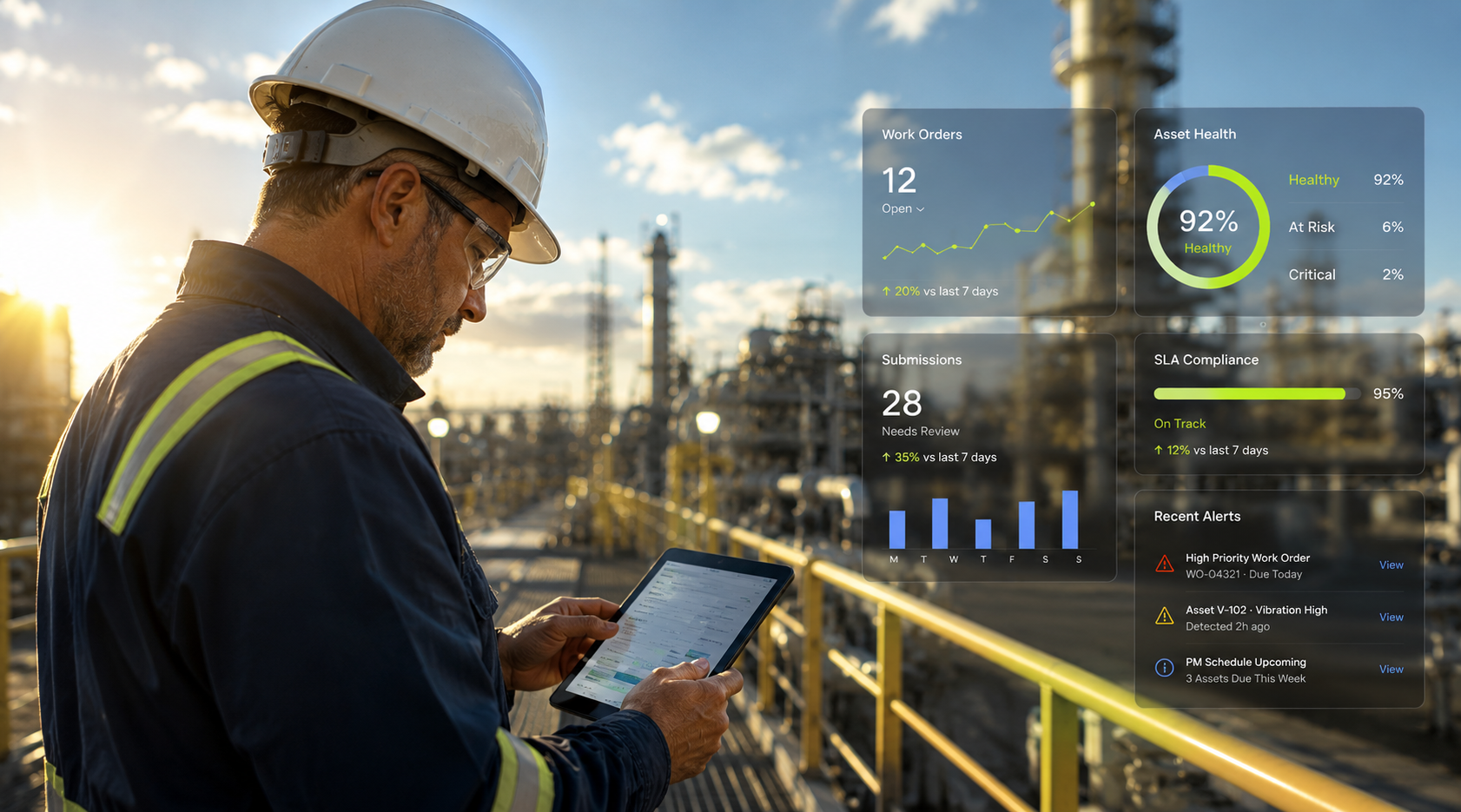
Field data intelligence is the ability to collect, connect, analyze, and act on field data to improve operational performance and business outcomes. It helps organizations move beyond basic data capture by turning field data into real-time visibility, stronger decision-making, better compliance, and more efficient field operations.
Organizations collect more field data than ever before. Technicians complete mobile forms, document asset conditions, log service details, record inspection results, and update work orders throughout the day.
But collecting data is only the first step. Many field service organizations still struggle to use that information to make faster decisions, spot recurring issues, or improve field performance.
Field data intelligence helps organizations collect accurate field data, connect it to the systems that run the business, analyze performance, and act before opportunities or issues are missed.
For companies managing complex assets, distributed teams, or high-volume service work, field data is more than documentation. It can help teams improve performance, reduce risk, and make better decisions.
This guide explains what field data intelligence is, how it works, where it creates value, and how organizations can implement it across field operations.
What is field data intelligence?
Field data intelligence is the ability to collect, connect, analyze, and act on field data to improve operational performance and business outcomes.
It brings together the workflows, systems, and insights needed to make field information useful across the organization. This approach enables organizations to establish a reliable flow of information among technicians, operations leaders, back-office teams, and enterprise systems.
There are four core pillars of field data intelligence:
- Data capture: Field teams need a consistent way to collect complete, accurate, and structured data. This includes service details, inspection results, asset information, photos, signatures, timestamps, geolocation data, and other information gathered during field work.
- Data connectivity: Field data becomes more valuable when it connects to the systems that already support the business. These may include enterprise resource planning systems, field service management platforms, asset management systems, customer relationship management (CRM) tools, and reporting platforms.
- Analytics and insights: Once data is captured and connected, organizations can use it to identify trends, monitor performance, track compliance, understand asset health, and uncover opportunities for improvement.
- Operational action: Field data only creates value when teams use it to make decisions, trigger follow-up work, or improve the next job.
TrueContext helps organizations put these pillars into practice by turning mobile data collection into connected field intelligence. With the right platform, field data can move beyond recordkeeping and become a real-time driver of operational performance.
How does field data intelligence work?
Once those four pillars are in place, field data can move through a repeatable cycle: capture it in a usable format, send it to the systems that need it, analyze what it shows, and use those insights to guide the next step.
Capturing structured field data
The first step is capturing field data in a consistent, structured format. Paper forms, spreadsheets, and free-text notes make it difficult to compare information across teams or turn it into usable insight.
Structured mobile workflows help standardize what data is collected, when it is collected, and how it is submitted. Features like conditional logic, required fields, barcode scanning, photo capture, and prefilled information can reduce manual entry while making data more accurate from the start.
For organizations building this foundation, AI data collection is becoming increasingly important. As AI becomes more common in field service, the quality and structure of field data will have a greater impact on the value organizations can generate.
Connecting systems and processes
If field information stays isolated in a mobile form, PDF, inbox, or spreadsheet, it cannot support the wider business. Organizations need to connect field data with the systems and processes that depend on it. This may include:
- Enterprise resource planning systems
- Field service management platforms
- Asset management systems
- Customer relationship management systems
- Business intelligence tools
- Document repositories
- Compliance systems
These integrations help reduce duplicate entry, give technicians better context, and make field data available to the teams that need it.
For example, a completed inspection can update an asset record; a failed checklist item can trigger a follow-up task; and a service report can inform billing, compliance, or customer communication. Information flows from the office to the field and from the field back to the business.
Analyzing operational performance
Field data analytics can help teams track key performance indicators; identify recurring issues; monitor asset conditions; and understand how work is being completed across regions, teams, or business units.
Common areas of analysis include:
- First-time fix rates
- Inspection completion rates
- Compliance exceptions
- Technician productivity
- Asset downtime
- Repeat service visits
- Maintenance trends
- Workflow bottlenecks
- Safety or quality issues
This gives leaders a clearer way to spot patterns, compare performance, and address problems before they spread. They also help address the field service AI data problem by giving AI, automation, and advanced analytics a stronger foundation of structured field data.
Turning insights into action
The final step is making sure the right next step happens automatically, whether that means assigning a corrective action, updating an asset record, or notifying a manager. Field data intelligence helps teams act on insights in real time. For example:
- A failed inspection can trigger a corrective action.
- A recurring asset issue can prompt a maintenance review.
- A compliance exception can notify the right manager.
- A trend in service delays can lead to workflow adjustments or additional technician support.
With automation and faster decision-making, field data becomes more than a record of what happened. It becomes a tool for shaping what happens next.
Benefits of field data intelligence
Field data intelligence helps organizations improve visibility, productivity, compliance, and decision-making across field operations. While the specific benefits vary by organization, the common thread is simple: better field data leads to better operational outcomes.
- Improved operational visibility: A field intelligence strategy gives leaders a clearer view of job status, asset needs, exceptions, and team performance in real time. This helps teams respond faster and manage operations with more confidence.
- Faster and more informed decision-making: Timely field data helps teams move beyond delayed reports, outdated information, and manual follow-ups. Leaders can make faster decisions about staffing, scheduling, maintenance, compliance, customer communication, and process improvement.
- Better compliance and reporting: Standardized workflows help teams document inspections, safety checks, asset maintenance, and proof of work more consistently. Structured field data also makes it easier to prepare reports for audits, customers, and internal reviews.
- Increased workforce productivity: Structured field data reduces paperwork, duplicate entry, and disconnected handoffs with mobile workflows and automation. It can also give technicians direct access to service history, asset details, troubleshooting steps, and compliance instructions within the workflow.
- Higher-quality business insights: Connected field data helps organizations see how field activity affects performance, cost, risk, and customer outcomes. Over time, these insights create a stronger link between field activity and strategic planning.
Accurate, connected field data is the foundation for all of these benefits. TrueContext helps organizations create that foundation with mobile workflows, integrations, automation, and real-time insights designed for complex field service environments.
For more on the role of mobile tools in technician productivity, see this guide to field service mobile apps.
Real-world applications of field data intelligence
This model can support many types of field operations. It is especially useful when work is complex, compliance matters, assets are critical, and teams need accurate information in real time.
Field service management
Field service teams need to coordinate technicians, work orders, customer expectations, asset records, and service outcomes. Field data intelligence standardizes how service information is captured, shared, and routed into connected systems for reporting, billing, and customer communication.
For example, if a technician identifies an unresolved issue during a service visit, the workflow can capture the details and route them to the right team. Managers can assign next steps more quickly and reduce the risk of missed follow-ups.
Asset maintenance and predictive maintenance
Asset-intensive organizations need reliable data on asset condition, service history, and maintenance activity. Field data intelligence helps technicians capture structured details during inspections, repairs, and preventive maintenance, including:
- Readings
- Parts used
- Failure codes
- Photos
- Technician notes
Over time, that connected data can reveal patterns in asset performance, recurring failure types, or maintenance needs. These insights help teams plan more proactive maintenance strategies and improve asset uptime.
Inspections and compliance programs
Inspection and compliance workflows depend on accuracy, consistency, and documentation. Field data intelligence replaces paper checklists and inconsistent spreadsheets with mobile workflows that help teams:
- Follow required inspection steps
- Surface relevant questions based on prior responses
- Prevent incomplete submissions
- Capture photos, signatures, timestamps, and location data
- Trigger alerts, reports, or corrective actions when issues are found
This strengthens the audit trail while reducing the manual work involved in documentation and reporting.
Connected worker initiatives
Connected worker initiatives give field teams the tools, data, and context they need to work safely and effectively. The data that workers capture can inform managers, operations teams, and enterprise systems. Field data intelligence supports these efforts by connecting:
- Mobile workflows
- Guided procedures
- Asset information
- Safety instructions
- Real-time updates
- Enterprise systems
The best connected worker platforms should support both sides of this exchange: helping field workers do their jobs while turning field activity into business intelligence.
How to implement field data intelligence
Implementation is easiest when teams start with a focused workflow, prove the value, and expand from there. The goal is to create a repeatable model for capturing, connecting, reviewing, and acting on field data across teams.
1. Start with structured data collection
Begin by choosing the field workflows where better data would have the greatest impact, such as:
- service reports, inspections
- safety checklists
- asset condition records
- customer sign-offs, maintenance records
- compliance documentation
For each workflow, define what information needs to be captured, which fields are required, and where the data needs to go next.
2. Standardize workflows across teams
In many organizations, different teams or regions complete similar work in different ways. Standardized workflows create a common structure for field activity. Teams can still account for local requirements or job-specific conditions, but the core data model remains consistent.
- This makes it easier to:
- Compare performance
- Identify trends
- Support compliance
- Scale best practices across the organization
3. Connect field and enterprise systems
Field data should not remain isolated in a form submission or static report. It should flow into the platforms that support:
- Operations
- Asset management
- Customer service
- Analytics
- Compliance
TrueContext’s mobile forms app helps organizations capture field data through mobile workflows and connect that data to business systems. This reduces manual handoffs and helps ensure that the right information reaches the right place faster.
4. Establish reporting and analytics processes
Field data intelligence depends on repeatable reporting and analytics processes. Define the KPIs that matter most to your organization. These may include:
- Completion rates
- Exception rates
- Asset performance
- Technician productivity
- Compliance trends
- Customer outcomes
Then, create reporting processes that help teams review this information regularly. Dashboards, automated reports, and workflow-level analytics can help leaders understand what is happening and where improvement is needed.
For organizations exploring the value of timely insights, this guide to the benefits of real-time data offers more context on how real-time information can improve field service performance.
5. Turn insights into action
Finally, connect insights to action. Decide what should happen when field data reveals a problem, exception, or opportunity.
- Should a manager receive an alert?
- Should a corrective action be assigned?
- Should an asset record be updated? Should a customer report be generated?
- Should a workflow change?
This way, teams can create a closed loop where field activity informs the next decision, workflow, or service visit.
How TrueContext enables field data intelligence
TrueContext brings the core pieces of field data intelligence into one connected workflow environment. Instead of treating mobile forms, integrations, reporting, and automation as separate tools, the platform helps organizations build field workflows that capture data once and use it across the business with:
- Mobile-first data capture: TrueContext helps field teams capture structured data via mobile workflows designed for real-world conditions. Technicians can complete forms, document work, capture photos, collect signatures, and submit data from the field.
- Workflow automation: Automated workflows help reduce manual follow-up and keep work moving. Organizations can use field data to trigger alerts, route approvals, generate documents, or initiate next steps based on the information submitted.
- Connected data: TrueContext connects field data with enterprise systems, helping organizations reduce silos and make information available across the business. This creates more context for technicians and better visibility for leaders.
- Reporting and analytics: Structured field data can support dashboards, reports, and performance analysis. Teams can track trends, monitor exceptions, and understand how field operations are performing over time.
- Real-time visibility: Better decisions depend on timely information. TrueContext helps organizations see what is happening in the field faster, so they can make better decisions and act with greater confidence.
Learn more about TrueContext’s connected data solution, or get a demo to see how the platform can support your field operations.
FAQ: Field data intelligence
What is field data intelligence?
Field data intelligence is the ability to collect, connect, analyze, and act on field data to improve operational performance. It helps organizations turn information from field teams, assets, inspections, and service workflows into insights that support better decisions and business outcomes.
What are the benefits of field data intelligence?
Field data intelligence can improve operational visibility, speed up decision-making, strengthen compliance reporting, increase workforce productivity, and generate better business insights. These benefits depend on accurate, structured, and connected field data that teams can use in real time.
How is field data intelligence different from field data analytics?
Field data analytics focuses on analyzing field data to identify trends, key metrics, and performance insights.
Field data intelligence is broader. It includes data capture, system connectivity, analytics, and the operational actions that turn insights into measurable improvements.
How can organizations implement field data intelligence?
Organizations can implement field data intelligence by starting with structured data collection, standardizing workflows, connecting field and enterprise systems, establishing reporting processes, and using insights to trigger operational action. A mobile workflow platform can help support each step.
